
Department
School
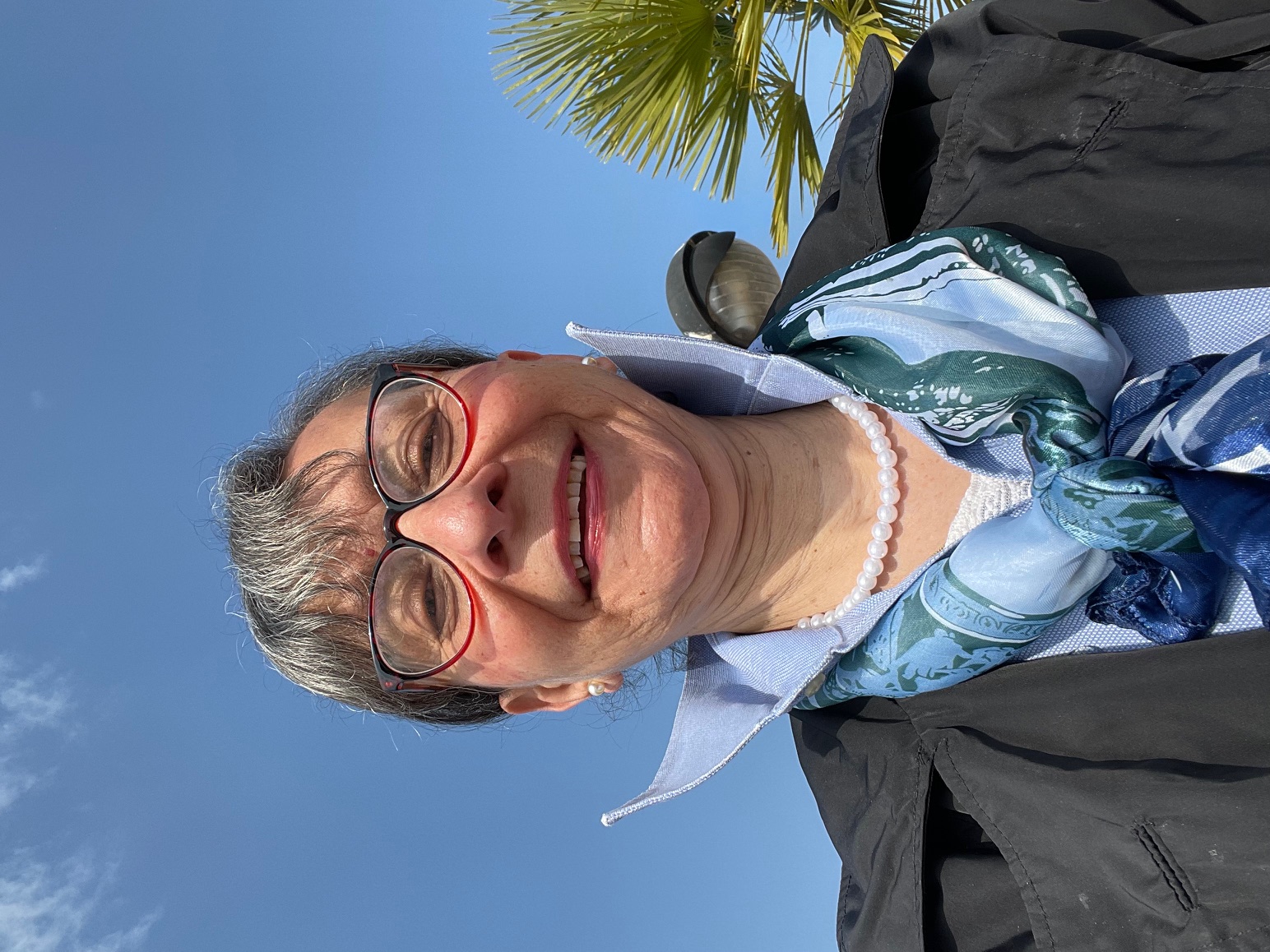
Myriam Wissa is a social and cultural historian who studies Ancient Oriental Christian monasticism and societies (dhimmis, taxation, revolts etc.), in particular the Egyptian-Christian (Coptic) and Syriac between the 3rd and 12th centuries AD. through the lens of literary (Coptic, Syriac, and Arabic) and documentary (Greek and Coptic) sources. Her primary research is focused on the historically intertwined connection between the Egyptian desert spirituality and the Latin West (Rome and Marseille) with special interest in Saint Onuphrius and Mary of Egypt’s Latin and Irish Lives. She is also interested in the Ancient, Greco-Roman, Byzantine Egypt, early Islam in Egypt and the Levant, Late Antiquity in Nubia and the Ethiopic Kingdom of Aksum. Her research, broadly speaking, explores the crossroads and the intersections between these historical cultures. Wissa studied at the University of Paris-Sorbonne (Paris IV), and the École Pratique des Hautes Études (Paris) where she obtained a first-class B.A. and completed her Doctorat d’État. She was a student in Coptic, Greek, and Biblical Hebrew at the École des Langues Orientales Anciennes (ELOA, Institut Catholique de Paris). She has also participated in several excavations led by the Institut franҫais d’archéologie orientale in Cairo at Karnak, Luxor, and the Red Sea monastery of Saint Anthony; the University of Rome at Antinoë (Professor Sergio Donadoni and the Classical archaeologist Ida Baldassare), and the Institut franҫais du Proche Orient (Jerash, Jordan). She has taught in the French, British, and American (The American University of Paris) academic systems and worked as Associate Fellow in the Département des Antiquités Égyptiennes et Coptes (under the supervision of Christiane Ziegler, Pierre du Bourguet, and Marie-Hélène Rutschowscaya), Musée du Louvre.
Dr. Wissa organized several academic symposia, wrote book reviews, published articles, chapters, and collected volumes on wide ranging subjects spanning Ancient and Late Antique Egyptian History, Toponymy, Lexicography, Codicology, social History, and Christian-Muslim relations. Her recent article is entitled Cataclysm in Tenth-Century Aksum? Wrestling with an obscure passage in the History of the Patriarchs of Alexandria. In: Sergey Loesov, Sergey Minov, Alexander Treiger, From Moscow to Baghdad. Studies on Middle Eastern Christianity in Memory of Nikolai Seleznyov. Texts and Studies in Eastern Christianity, Brill (December 2025), Volume: 42; and her recent Chapter number 17 is entitled Coptic Period (AD 284–868). Ian Shaw, The Oxford History of Ancient Egypt, Oxford University Press (2026). Her recent books include Scribal Practices and the Social Construction of Knowledge in Antiquity, Late Antiquity and Medieval Islam (Leuven: Peters, 2017). Dr. Wissa launched and is co-editing the new book series, Non-Muslim Contributions to Islamic Civilisation (Edinburgh University Press). Wissa is currently developing a collected volume for Catholic University of America Press: The Temptation of Holiness. The Gift of Egyptian Monasticism to East and West to be published in the series: Ancient Christianity.